Seminar

Agenda: Ethical responses in art-craft making
Three artists are invited to share their perspectives on how they relate to ethics in their respective practices: Lise Bjørne Linnert, Märta
Mattson and Marilen Rauch.
This seminar begins with a common stance: both society and nature are in crisis. In these circumstances, “sustainability” has become one of the most important solutions. But what does sustainability mean when we think beyond resources and emissions? How can we create socially sustainable environments for artistic research and practice? What ethical choices affect how we work, teach, collaborate, and create?
Sustainability can illuminate important ecological and social responsibilities. But it can also be too narrow when it reduces complex relationships to technical goals, institutional routines, or moral demands on individuals. In artistic research, ethics therefore needs to address both material impacts and the social conditions of practice. Materials carry with them stories of extraction, labor, ecology, trade, use, waste, care, and repair. Artistic work also depends on social relations - it manifests itself through bodies, time, attention, shared spaces, and institutions. Instead of seeing ethics as a fixed set of rules, we can see ethics as something that is tested in practice, focusing on concrete examples, artistic methods and shared conversations. The goal is then to create a space where artistic research can be understood from its social, ecological and political context.
A warm welcome!
Program
09.00 Coffee and intro of day
09.15 - 10.15 Presentation by Lise Bjørne Linnert
10.15 - 10.30 Paus
10.30 - 11.30 Presentation Marilen Rauch
11.30 - 12.00 Q & A Lise Bjørne Linnert and Marilen Rauch together with Emelie Röndahl (subject leader Textile) och Kjell Rylander (subject leader Ceramic)
12.00 - 13.00 Lunch
13.00 - 14.00 Presentation on ZOOM by Märta Mattsson + Q&A together with Jorge Manilla Navarrete (subject leader Metal)
Note: only Märta Mattsson will present on ZOOM
Link to zoom
Lecture: When Materials Had a Life of Their Own
In this lecture, jewellery artist Märta Mattsson explores the complex relationships between materials, nature, animals and humans, drawing from her own artistic practice as well as the work of other artists who use animals and animal-derived materials in their art. Through insects, natural materials and artificial substances, she examines how materials can carry associations of beauty, attraction, disgust, death, transformation and desire. The lecture also considers how humans have historically viewed and classified nature, and where we draw the boundaries between humans and other animals. By looking at the ethical and emotional questions surrounding the use of animals as artistic materials, the lecture asks what happens when something that once had a life becomes part of an artwork. Ultimately, it reflects on how our material choices can reveal our ideas about nature, other species and our own place within the living world.
Lecture: In every bag of clay are several mines
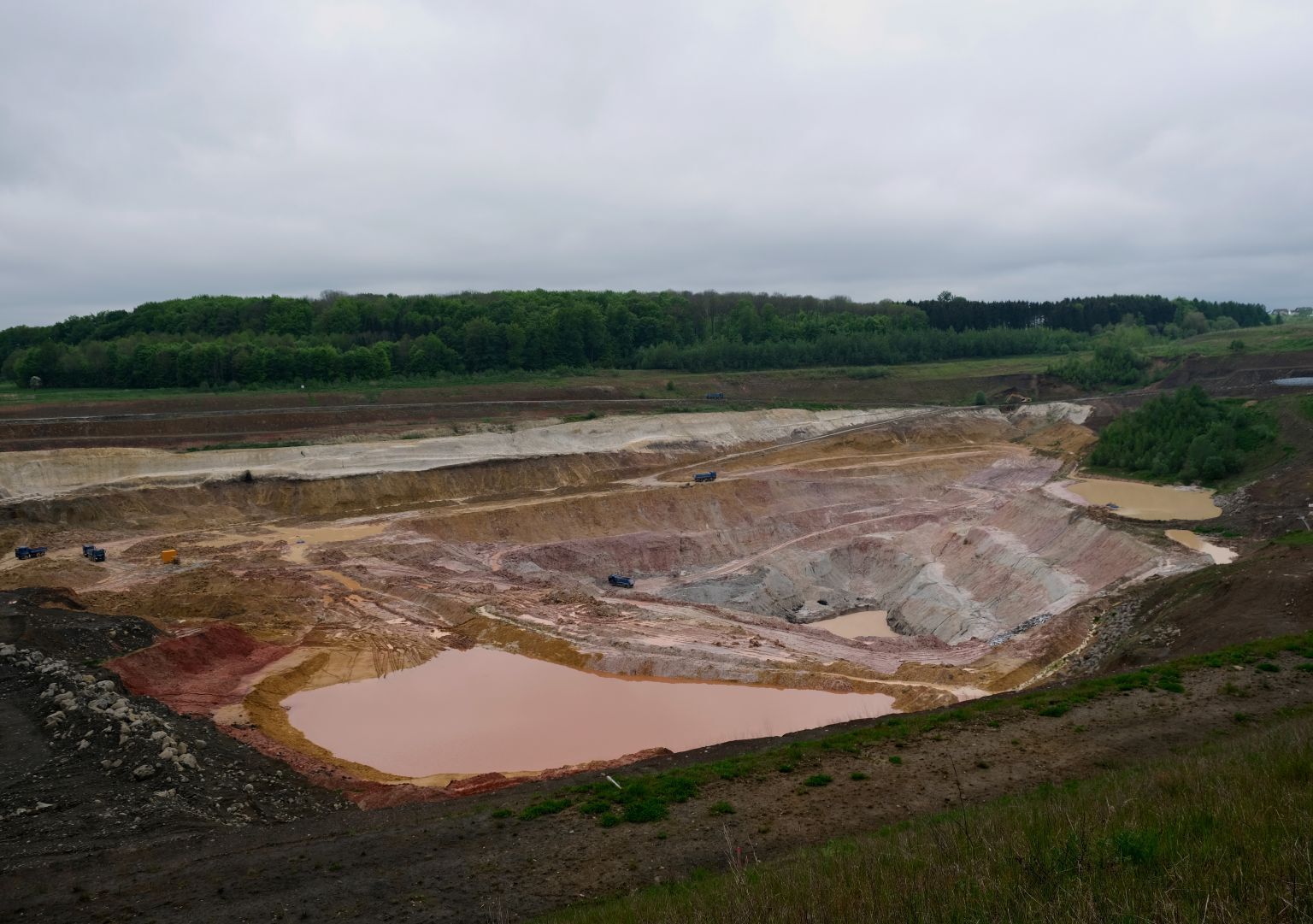
Where does the clay in a ceramic studio come from? This question came to me as I picked up a plastic bag of clay in the storage at my former school. What lies behind the materials we work with? This had hardly been part of my ceramic education. We learn about clay and other ceramic minerals through their properties, how to work with them and what happens during firing, but we usually learn very little about the landscapes, mining and production processes behind them. This curiosity led me to dig for and collect local clay in Sweden, which in turn took me to the large clay mining region of the Westerwald region in Germany and its industrial clay production, as well as to the origins and mining of other ceramic minerals such as feldspar. I began thinking through and with these materials, moving between research, fieldwork, making and collaboration. The deeper I explored the materials, the more complex the questions became. What does it mean to know more about the materials we work with? What do we do with this knowledge and what responsibilities might we have once we possess it? How does this change our relationship to the materials, places and people involved in their production?
Lecture: Art as a way to care and become aware
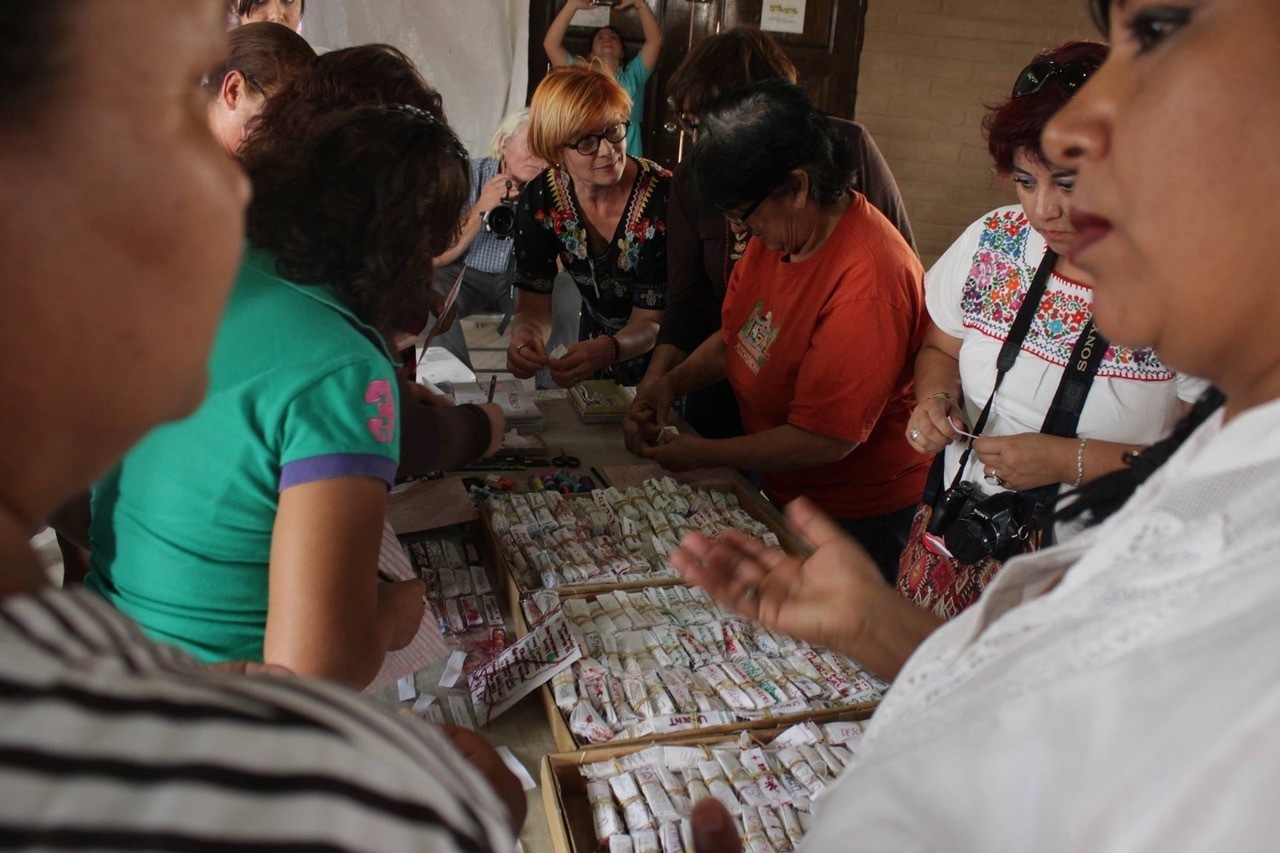
Navigating vulnerability, boundaries, fear and trust. Two decades of collaborating across different social, cultural and institutional contexts have raised questions, brought challenges, and given me lessons to grow from. About honesty and doubt, boundaries, respect and dignity, acceptance and grief. About strength, and the conversations that begin when our hands are at work.
Marilen Rauch
Marilen Rauch is a ceramic artist based in Gothenburg, Sweden. She graduated with a MFA in Ceramic Art from HDK-Valand – Academy of Art and Design in Gothenburg and is currently undertaking the postgraduate programme ‘Of Public Interest’ at the Royal Institute of Art in Stockholm. She works with self-extracted clay and ceramic minerals, field recordings and site-responsive installations. She is also a co-founder of Tontouristen, a collective exploring the transformative journey of clay. Her work has been exhibited nationally and internationally, including at the Salt Museum in Korea, European Ceramic Context in Denmark, Konstepidemin in Sweden, Gyeonggi Museum of Contemporary Ceramic Art in Korea, Konstnärshuset Stockholm, GIBCA – Göteborg International Biennial for Contemporary Art and Keramikkünstlerhaus Neumünster in Germany.
Lise Bjørne Linnert
Lise Bjørne Linnert lives and works in Oslo, Norway. She studied at Oslo Interdisciplinary Art Institute, Norway, Evanston Art Institute, Chicago, and the Glassell School of Art at the Museum of Fine Arts, Houston. Her relational and activist practice spans performance, photography, drawing, textiles and installation, exploring art as a way to raise awareness, create dialogue and open possibilities for change. Her work has been shown widely in Norway and internationally, including at the UN Office of the High Commissioner for Human Rights in Mexico City, the Rubin Center in El Paso, the Station Museum of Contemporary Art in Houston, Nordenfjeldske Kunstindustrimuseum, SOFT galleri and Galleri F15. She was festival artist at Olavsfest in 2023 and the Bjørnson Festival in 2025. Håndtere, a duo exhibition with Jannik Abel, will be on view at TSSK in Trondheim this fall.
Märta Mattsson
Born in Stockholm, Sweden, Märta Mattsson first studied jewelry in Gothenburg at HDK School of Design and Crafts. She perfected her technique by completing courses at London Royal College of Art, Tokyo Hiko Mizuno College of Jewelry, and Rhode Island School of Design. Märta's work is in the collections of museums worldwide including the Schmucmuseum Pforzheim, Stockholm's National Museum, the Museum of Art and Design in New York, and the Museum of Fine Arts Houston.