Seminar

Agenda: Print Matters
Print Matters is developed within the framework of the Agenda seminar series by the Printmaking Subject Area. Bringing together artists, researchers, and practitioners, it focuses on contemporary print practices and their expanded possibilities.
At its core, this edition engages with the ongoing redefinition of printmaking, approaching it not as a fixed medium but as a field shaped by technological, ecological, and cultural transformations. Rather than stabilising its boundaries, Print Matters addresses the tensions and ambiguities involved in rethinking what printmaking is today.”
Through lectures and presentations, the seminar examines practices that challenge inherited categories and move across disciplinary borders. In doing so, it opens up a space for considering new ways of understanding, classifying, and articulating printmaking, less as a defined technique and more as a mode of thinking and making within contemporary art.
Program
09:30–10:00 Coffee mingle
10:00–10:10 Welcome and introduction by Aleksandra Janik
10:10–11:00 Vinicius Libardoni, From Absence to Artefact: Print as a Medium for Architectural Memory
11:10–12:00 Monika Lukowska, Beyond Surface: Expanding Materiality in Contemporary Printmaking
12:00–13:00 Lunch break
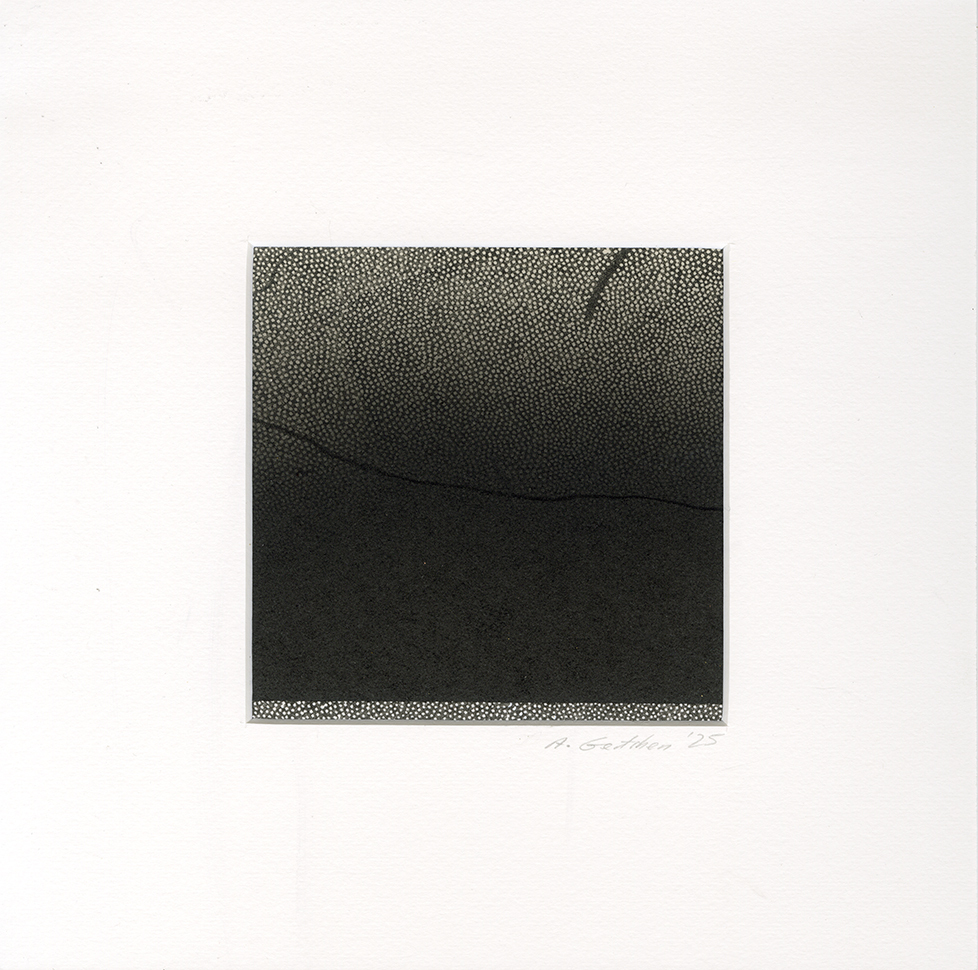
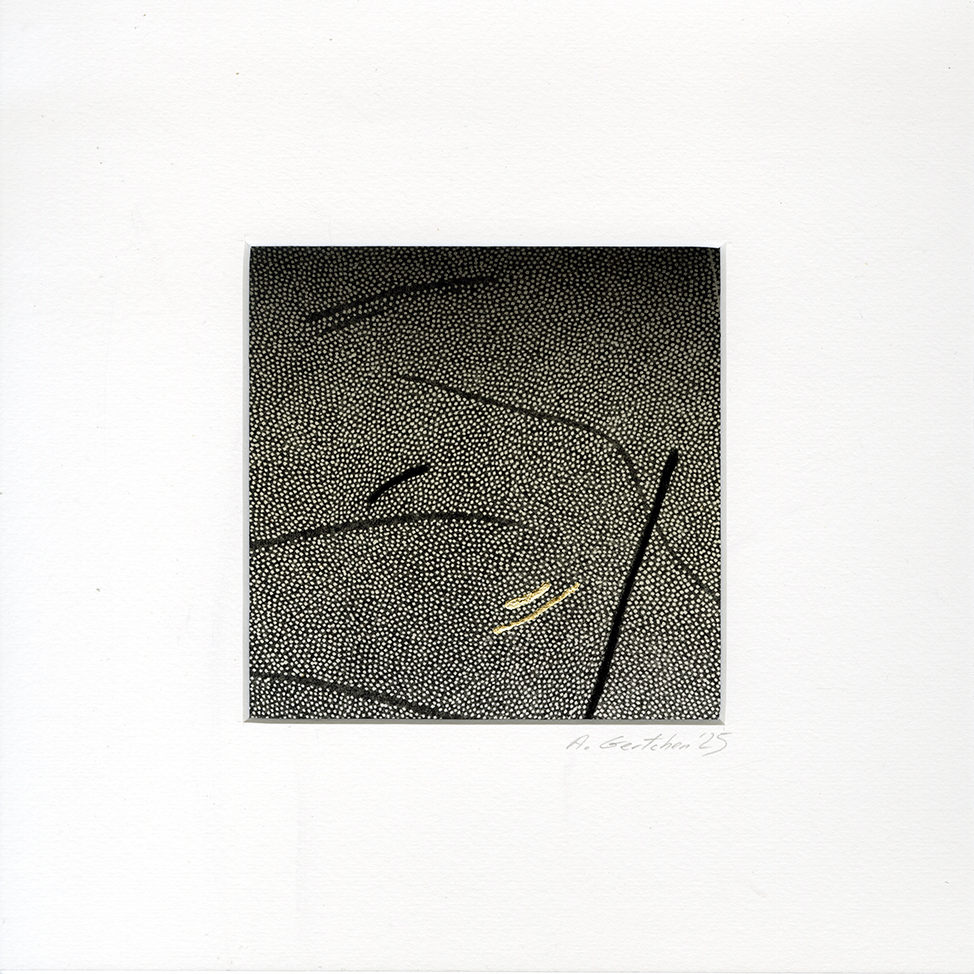
13:00–13:50 Agata Gertchen, Size Matters – The Art of Linocut Stippling
14:00–14:30 Sybilla Skałuba, Liminal Spaces: Experimenting with the Matrix as a Process of Form Transformation, audio-visual screening and artist talk
14:30–14:40 Coffee break
14:40–15:00 Q&A and open discussion
15:00–16:00 Meet the artists in the gallery space
Collateral Exhibitions
13–17 April, 2026
Fragments for an Archive
Vinicius Libardoni
The area in front of the service center
Size Matters
Agata Gertchen
White Box
Vinicius Libardoni
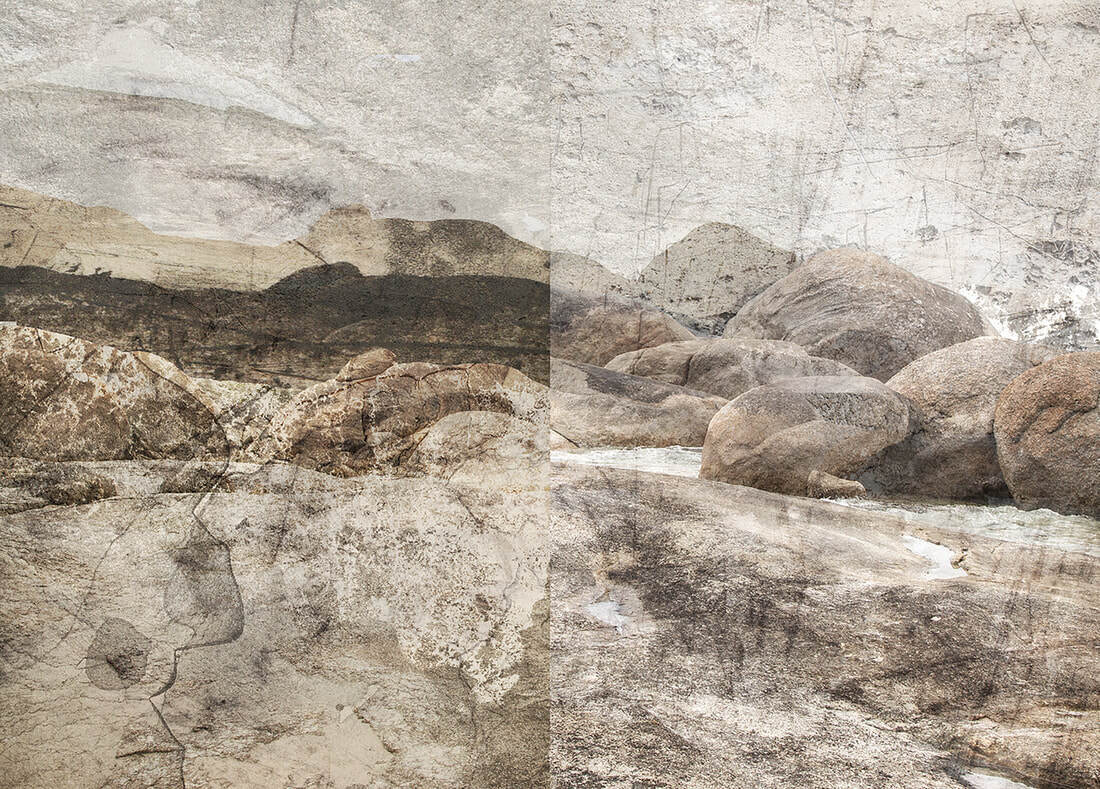
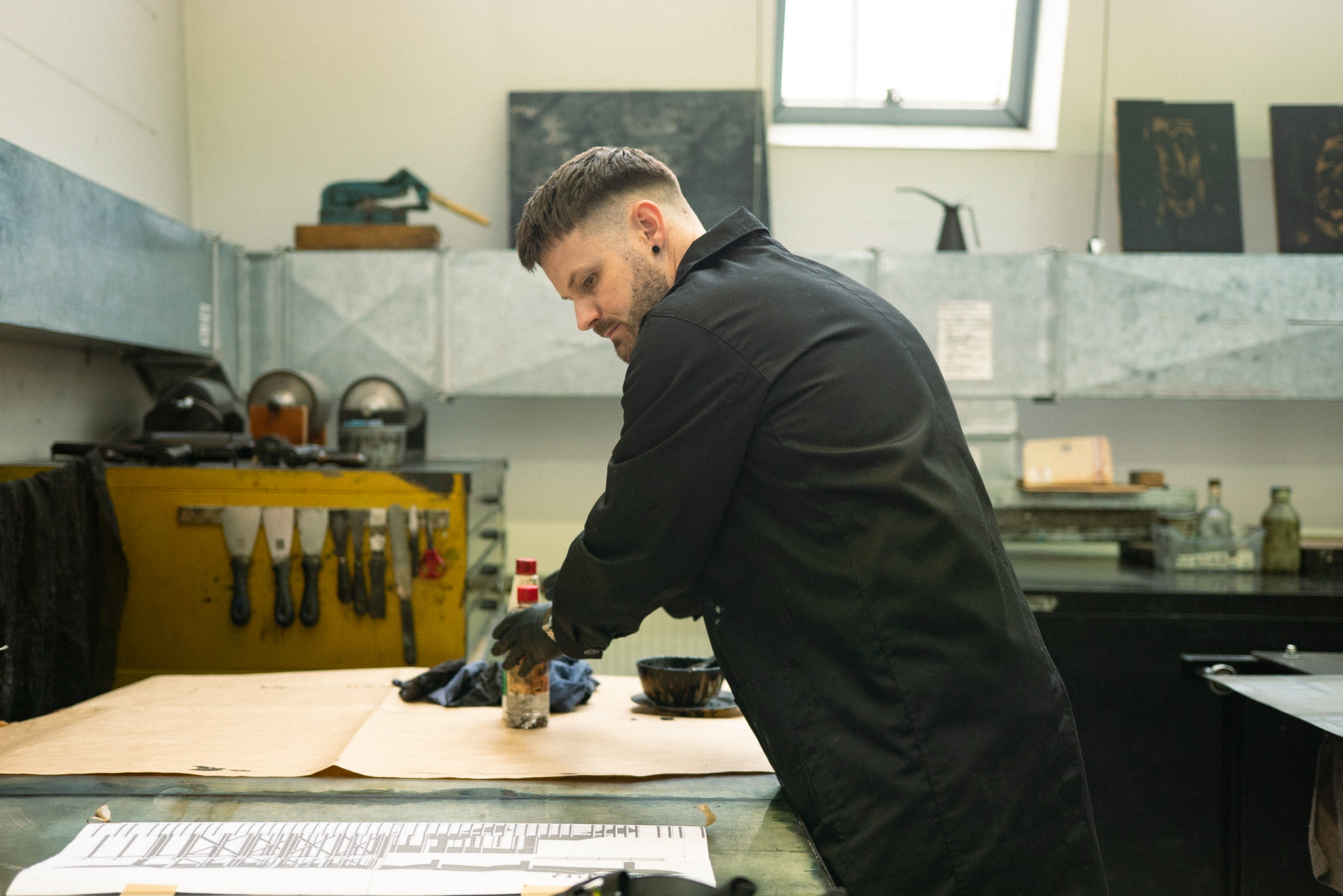
Vinicius Libardoni holds a Bachelor of Architecture from the Universidade Federal de Santa Catarina (Brazil), and both an MFA and a PhD in Arts from the Eugeniusz Geppert Academy of Art and Design in Wroclaw, Poland. His research and artistic practice expand traditional printmaking through experimental processes that merge etching with construction materials, developing a distinctive approach that moves the image into three-dimensional space.
Libardoni is currently in a Visiting Position as an Assistant Professor of Art at the New York University Abu Dhabi. His work has been presented internationally in exhibitions, biennials, and printmaking triennials, contributing to the expanded field of contemporary printmaking.
> viniciuslibardoni.com
Artist statement
Vinicius Libardoni is an architect and visual artist working at the intersection of printmaking and spatial thinking. His practice operates between disciplines, expanding printmaking into a spatial and material field. Rooted in the built environment, his work engages memory, absence, transformation, and time, focusing on architectures that persist as traces – abandoned, altered, or erased.
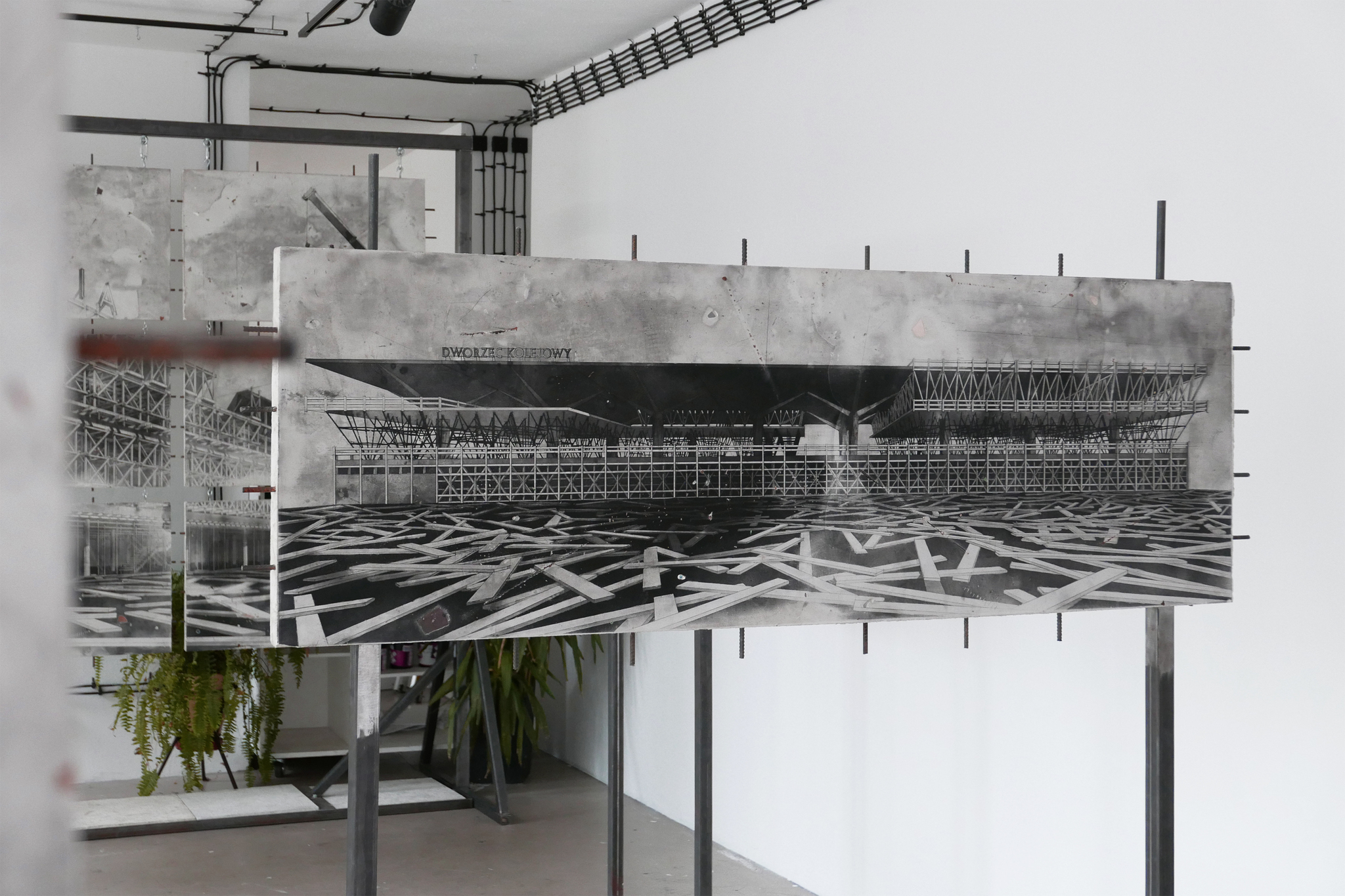
At the center of his practice are the Concrete Printed Objects, a body of work that extends print beyond paper into tridimensional sculptural installations. Developed through a self-defined process, these works merge etching, casting, and construction, where concrete becomes both image and matter. Buildings appear as fragments, imprints, suspended in time – neither fully present nor gone, but caught between form and its uncertain future. Through this process, printmaking becomes an archaeological act, recovering lost architectures and reactivating their presence in space.
Across his work, Libardoni constructs a field that is both evidence and gesture – a continuous attempt to hold what is disappearing. It unfolds between permanence and fragility, structure and erosion, memory and invention. Rather than preserving the past, he rebuilds it as experience: tactile, incomplete, open. What emerges is a practice where architecture becomes imprint, and print becomes a way of keeping time in matter.
Abstract
From Absence to Artefact: Print as a Medium for Architectural Memory
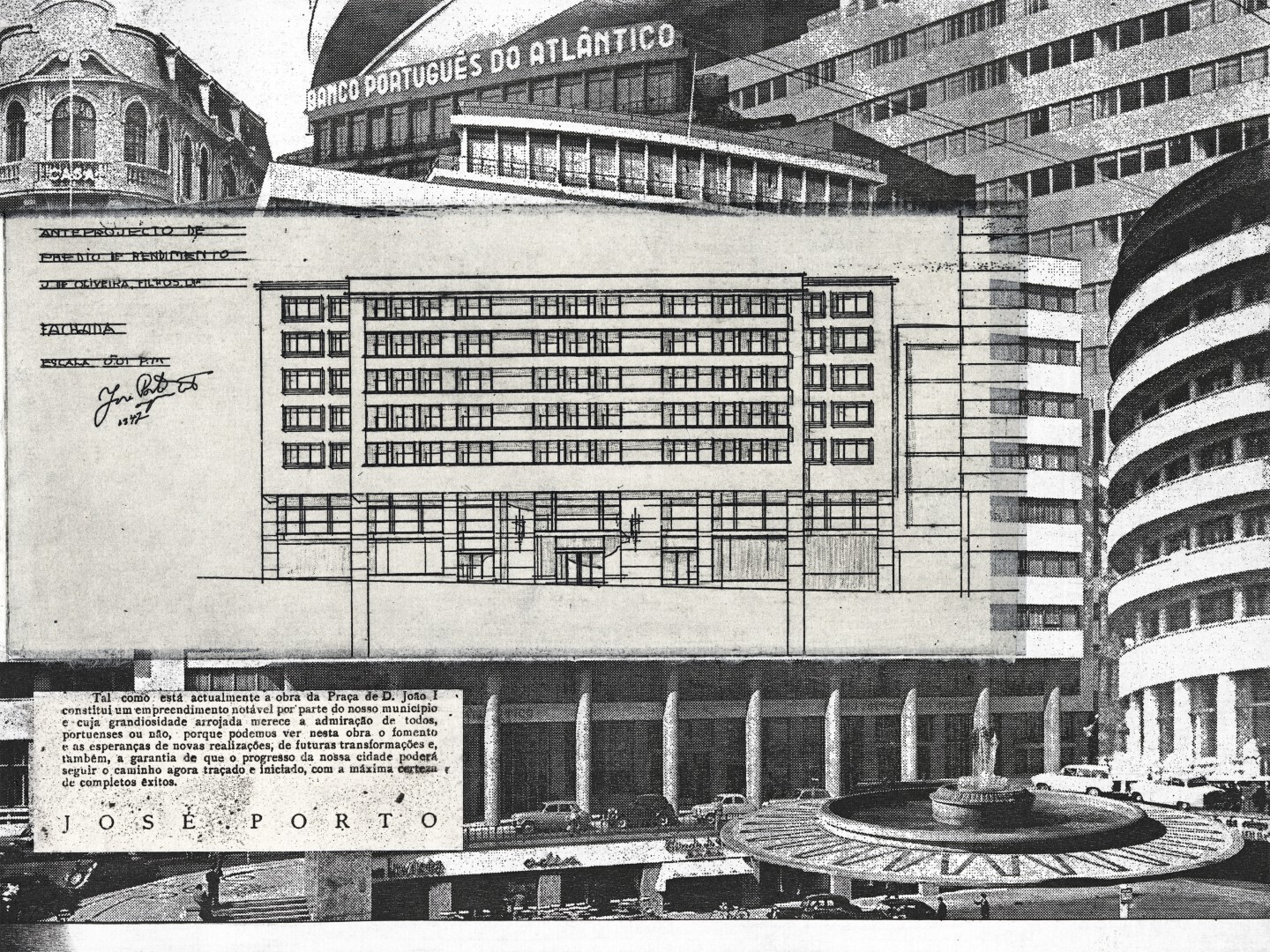
In an age when medium, materiality and meaning are in flux, this presentation investigates a printmaking practice that turns toward what no longer exists in physical form – structures surviving only in archival or digital documentation. Instead of offering prints as mere reproductions, the work positions them as re-statements of the lost object: constructed digitally, then realised as new material artefacts. The process foregrounds mediation, interpretation and labour, and invites reflection on how print might transcend replication to materialise immateriality.
Agata Gertchen
Bio
Agata Gertchen graduated with an MA in Graphic Arts and Graphic Design from the Eugeniusz Geppert Academy of Art and Design in Wrocław. In 2016, she received her PhD degree. She currently works as an Assistant Professor in the Studio of Intaglio Printing at her alma mater.
Her artistic practice focuses primarily on linocut, mezzotint, and drawing. She has received over twenty awards and distinctions at international print competitions. Among the most significant are: the Grand Prix at the 12th Biennial Competition for Graphic Art in Bruges, Belgium (2009); First Prize in the Printmaking Category at the 38th World Gallery of Art on Paper – Osten, Skopje, North Macedonia (2010); the Grand Prix at the 7th International Triennial of Graphic Art in Bitola, North Macedonia (2012); the Best Print Award at the SGCI Members Exchange Portfolio during the SGC International Conference in Knoxville, USA (2015); the Tadeusz Kulisiewicz Foundation Award at the International Print Triennial in Kraków (2015); and Second Prize Prix Desjardins at the 10th Biennale internationale d’estampe contemporaine in Trois-Rivières, Canada (2017).
Her works have been presented in over 170 exhibitions in Poland and abroad, including in the United States, Canada, Australia, Japan, South Korea, China, India, Iran, and numerous European countries. She has held twenty-four solo exhibitions.
> Instagram: @agata_gertchen
Artist Statement
My artistic practice grows out of everyday life and the objects that shape it – those overlooked, repetitive, and seemingly insignificant elements that quietly structure the rhythm of daily experience. I am interested in what often goes unnoticed: fragments, traces, small gestures, and the remnants of routine actions. In my work, I observe how ordinary situations and domestic realities become spaces of tension, emotion, and the constant negotiation of attention.
Objects connected to daily life are not merely formal motifs for me, but carriers of lived experience of labor, care, fatigue, and repetition. What is scattered, dispersed, or momentary becomes material for reflection on the visibility and invisibility of everyday work, and on the fragility of order that is continually disrupted. I am drawn to the moment when the ordinary begins to reveal its weight and significance.
Through artistic practice, I transform the matter of everyday life into a field of concentration. What is small and frequently overlooked can become intense, insistent, and demanding attention. In this way, my work becomes an attempt to hold onto what is fleeting and to give form to experiences that usually remain outside the center of vision.
Abstract
SIZE MATTERS – The Art of Linocut Stippling
The lecture is devoted to stippled linocut, a printmaking technique in which the image is constructed through the rhythmic accumulation of individual dots. It begins with the history and origins of this method and considers its position within contemporary graphic art. Particular attention is given to the significance of scale, both formal and perceptual, and to the ways in which the size, density, and rhythm of the dot influence the reception of the image and the viewer’s experience.
The lecture will also present examples of Polish artists working in miniature stippled linocut, highlighting diverse contemporary approaches to this time-intensive and demanding technique.
In its final part, the talk addresses the possibilities of large-format linocut through the lens of the author’s artistic practice, where a shift in scale becomes a means of intensifying gesture, bodily engagement, and emotional expression.
The lecture is addressed to artists, students, and all those interested in printmaking and formal experimentation from the micro-world of a single dot to the monumental dimension of the image.
Monika Lukowska
Bio
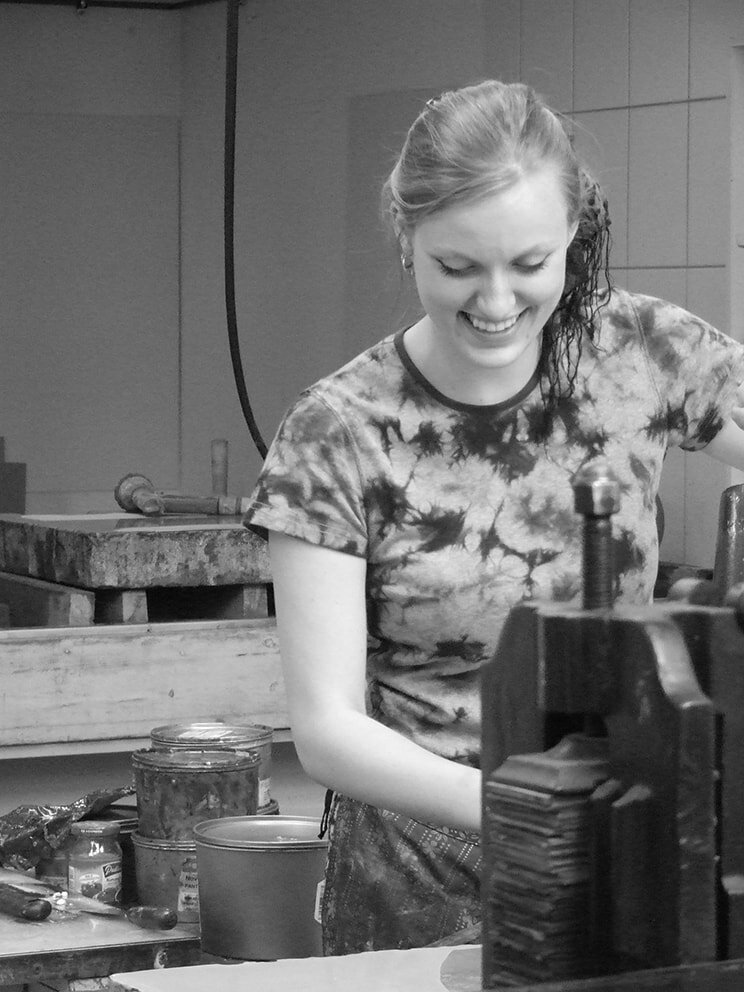
Monika Lukowska is a printmaking artist, educator and academic from Poland currently based in Perth, Western Australia. She works as a lecturer at Curtin University and is a Print Council of Australia Representative for Western Australia.
About my practice
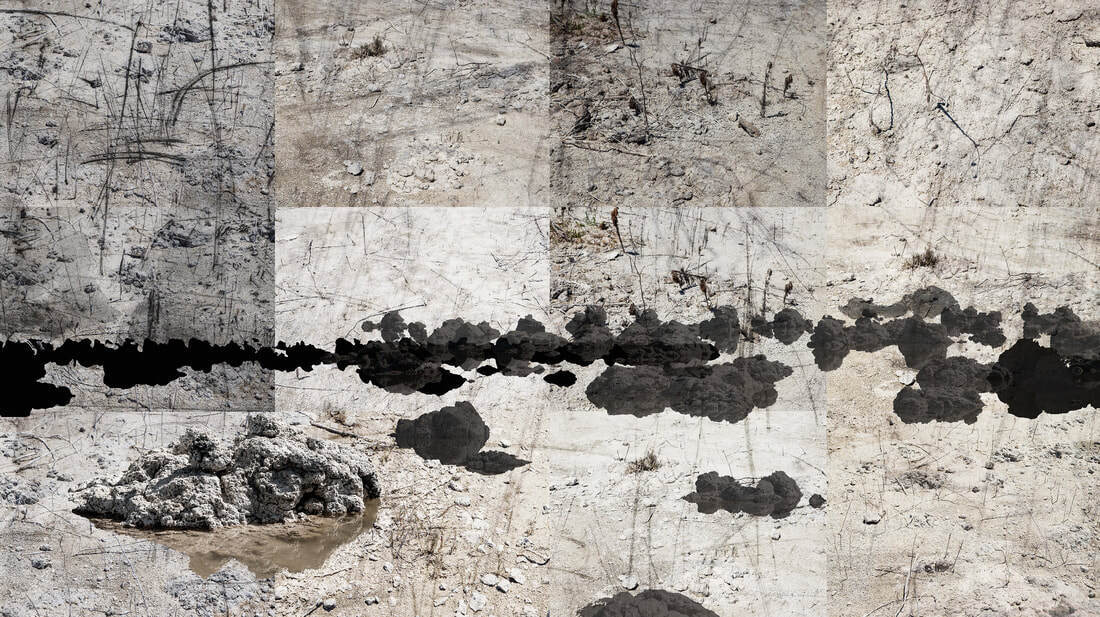
The principal themes that I explore in my works is the impact of place and its materiality on art practice. Direct and physical engagement with place through mindful walking practice assist me in understanding its character and specificity – culture, specific architecture, natural environment and materiality. My artworks are therefore conditioned by the complexity of place and become an emotive response to new and familiar environments. Through my work, I question how a sense of place, atmosphere, memories and sensations can be embedded within a printed surface
In my art process, I collect materials in form of photographs, drawings and video recordings, that are later used in my prints. I am especially interested in investigating the potential of merging digital and traditional printmaking processes.
Contact
lukowska.mm@gmail.com
Abstract
Beyond Surface: Expanding Materiality in Contemporary Printmaking
Contemporary printmaking defies easy definition. Traditionally identified by unique processes such as lithography, etching, woodcut, and mezzotint, the boundaries of printmaking have since become fluid. Today, the medium spans diverse forms, including 3D printing, sound, installation, virtual and augmented reality, AI-generated prints, and animation, to name a few. This amalgamation reflects the constantly shifting world, where physical and digital realities merge.
Prints that once depended on materials, tools, and artists’ skills now increasingly transcend the need for a tangible matrix or surface, inviting new debates on materiality, edition, authenticity, authorship, and artistic labour. This presentation focuses on the materiality of print – a concept traditionally linked to physical substance – that has expanded to include sensorial properties brought by new technologies such as sound, moving images, interaction, and immersive installations. Reflecting on the work by contemporary printmakers such as Deborah Cornell and Rebecca Beardmore, amongst others, it explores printmaking materiality in an expanded sense that embraces sensory experienceand moves beyond physicality.
Sybilla Skałuba
Bio
Sybilla Skałuba is a respected visual artist and Professor at the Academy of Fine Arts in Katowice, where she passionately heads the Relief Printmaking Studio.
Her artistic practice is characterized by the remarkable ease with which she balances diverse media, encompassing printmaking, object, sound, and video art. Skałuba's creative process is deeply intuitive, rather than calculated, often taking the form of arduous and meditative practices. Combining various tools and materials, the artist utilizes a wide spectrum of techniques developed over the years, including both classical and digital methods, consistently advancing her interdisciplinary path as an active participant in numerous national and international exhibitions.
As a lecturer, she is actively involved in didactic and organizational work dedicated to the popularization of science and art. During her career, she participated in collective activities, notably within the BIBU Group, while also owning the accompanying BIBU Gallery of Contemporary Art. She also led intensive international collaborations, which resulted in projects such as Transitonal Urban Matrix (with Academia di Bella Arte in Porto), Project Connect (with Chelsea College of Arts in London), and strong cooperation with the Japanese Ryu Contemporary Art Group and the Hamano Art Foundation, among many others.
Furthermore, she was heavily involved in the realization of the Golden Vision Music and Art project. This initiative aimed to protect cultural heritage through artistic activities in post-industrial sites in Silesia, giving revitalized spaces a new function that referenced the golden age of the region's industrial revolution. These events took place in characteristic locations within the Silesian Voivodeship, such as the former management building of the Uthemann Steelworks, the Rolling Mill of the Non-Ferrous Metals Steelworks in Katowice-Szopienice, the Obywatelski Brewery in Tychy, and the Railway Station in Ruda Śląska Chebzie.
Description
Liminal Spaces: Experimenting with the Matrix as a Process of Form Transformation
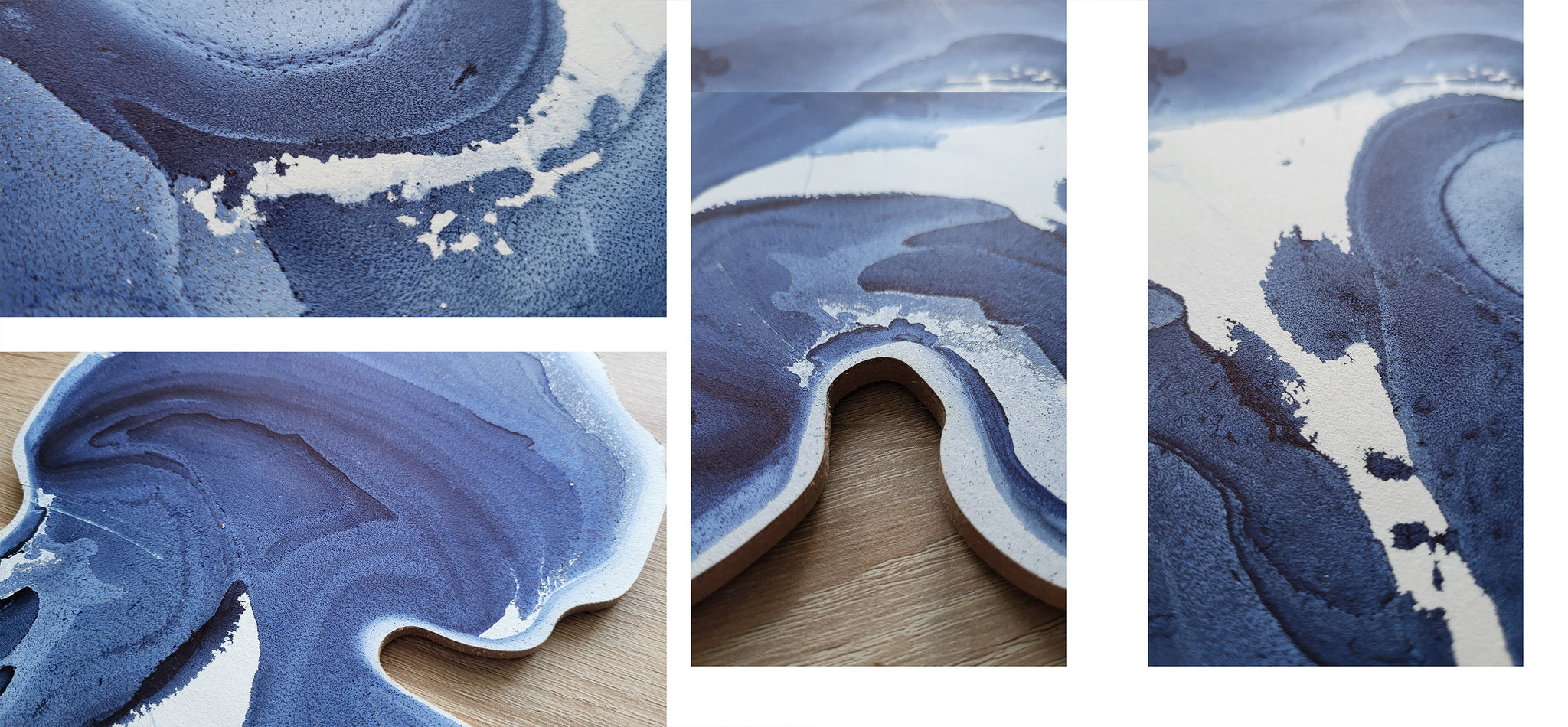
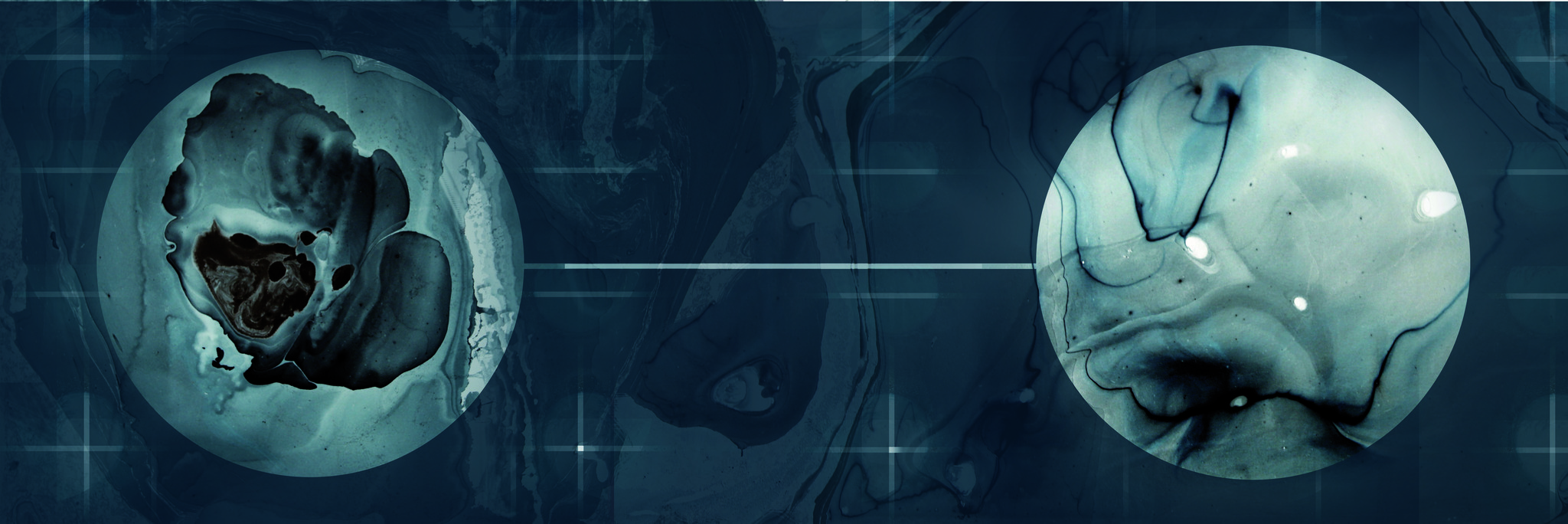
My practice is rooted in an exploration of transitional states, asymmetry, and liminality. I am particularly concerned with the posthuman body as it transcends its purely biological origins, examining the moment when organic matter merges with technological intervention, genetic modification, and synthetic DNA. Through a multidisciplinary approach encompassing video art, soundscapes, and physical objects, I investigate how isolated tissues and cellular structures gain a non-obvious status, inhabiting a 'liminal' space between discarded biological byproduct and sentient life. Central to my current exploration is the concept of water as a matrix. By employing water-based printing processes, I treat the fluidity of the element as a primary source and a carrier of form. In this context, water becomes a transient plate – a shifting foundation that mirrors the instability of life codes. My work serves as a profound, visceral investigation into the core of these transformations, where the sonic, the visual, and the elemental converge to redefine the boundaries of the living.
.